
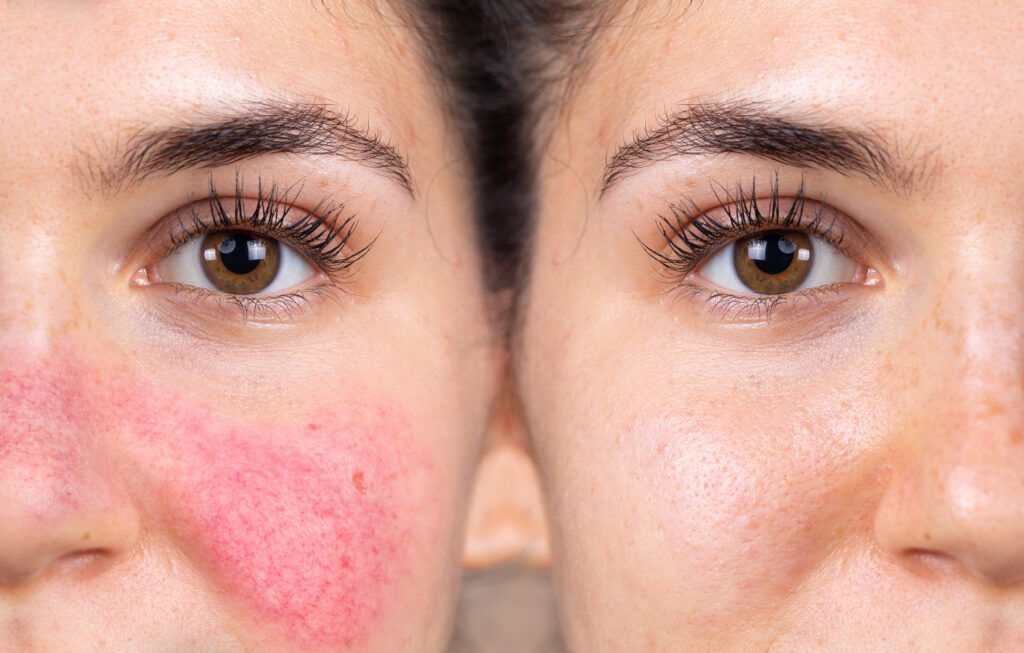
Understanding Rosacea: What Is It?
Rosacea is a common skin condition that causes redness and visible blood vessels, mainly on the face. Many people notice small bumps or pimples as well. Although rosacea can affect anyone, it often appears in adults over 30. Early rosacea management can help reduce redness and prevent flare-ups. According to the American Academy of Dermatology, millions of people worldwide live with this condition.
Common Symptoms of Rosacea
Recognizing rosacea early can make treatment easier. For example, you may notice:
However, symptoms can vary from person to person. Some people may only have mild redness, while others experience more severe effects.
Main Causes and Risk Factors
Doctors do not know the exact cause of rosacea. Still, several factors can increase your risk. For instance, genetics play a role, so you may be more likely to develop rosacea if a family member has it. Other risk factors include:
Because triggers can differ, keeping a diary of your symptoms may help you spot patterns.
Diagnosis: How Is Rosacea Identified?
Doctors diagnose rosacea by examining your skin and asking about your symptoms. There is no single test for rosacea. Instead, your doctor may rule out other skin problems, such as acne or eczema. Sometimes, a dermatologist may use a magnifying tool to look closely at your skin. Early diagnosis helps with better rosacea management and treatment.
Rosacea Management: Evidence-Based Treatment Options
Effective rosacea management often combines medical treatments and lifestyle changes. Your dermatologist may suggest:
Additionally, following your doctor’s advice and using gentle skincare products can make a big difference. According to the National Rosacea Society, combining treatments often works best.
Daily Skincare Tips for Rosacea Management
Proper rosacea skincare can help reduce redness and prevent irritation. For example, you can:
Furthermore, always test new products on a small area first. This helps prevent unwanted reactions.
Prevention Strategies and Flare-Up Triggers to Avoid
Preventing rosacea flare-ups is possible with a few simple steps. For instance, you should:
In humid or hot climates, keep cool with fans or air conditioning. In dry areas, use a humidifier to add moisture to the air. Because triggers vary, tracking your symptoms can help you find what to avoid.
When to Consult a Dermatologist
If you notice ongoing redness, bumps, or eye irritation, it is time to see a dermatologist. Early treatment can prevent symptoms from getting worse. Moreover, a dermatologist can create a personalized rosacea management plan for you. If over-the-counter products do not help, or if symptoms affect your daily life, professional advice is important.
Conclusion: Take Charge of Your Rosacea
Rosacea can be effectively managed with the right care and support. By identifying triggers, using gentle skincare, and following medical guidance, you can reduce redness and achieve clearer skin. For personalized rosacea management advice, consult Dr. Kavita Singh.