
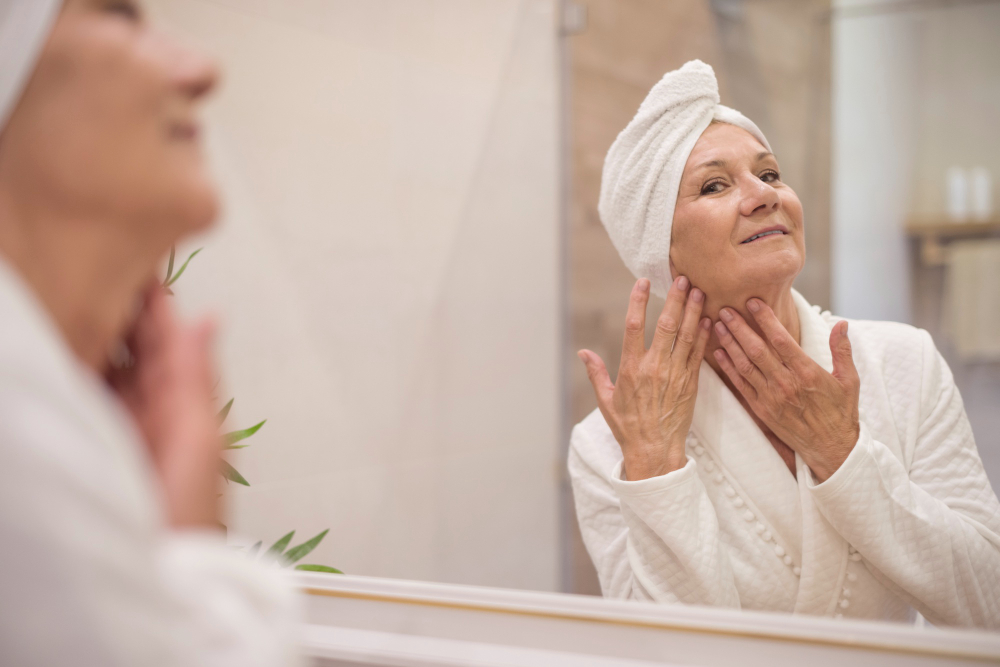
What Is Aging Skin?
Aging skin is a natural part of getting older. Over time, your skin changes in many ways. For example, it may look thinner or feel less firm. Although everyone ages differently, most people notice changes in their skin by their 30s or 40s. Because aging skin affects everyone, it is important to know what to expect. This helps you support healthy skin as you age. According to the World Health Organization, skin aging is a normal process, but some factors can speed it up.
Early Signs of Aging Skin
Often, early signs of skin aging can appear before you expect them. For instance, you might notice small changes in your skin’s look or feel. Knowing these signs helps you take action early. Common early signs include:
Sometimes, you may also see more visible pores or a dull look. Because these signs can appear slowly, it helps to check your skin often.
Common Causes of Skin Aging
Many things can cause your skin to age. While some causes are natural, others come from your daily habits. For example, sun exposure is a major cause of early skin aging. But there are other reasons too:
Because some causes are under your control, you can take steps to slow down aging skin.
Diagnosis and When to Seek Advice
Usually, you can spot early signs of skin aging at home. However, sometimes changes in your skin may need a doctor’s advice. For example, if you notice sudden spots, sores that do not heal, or changes in moles, you should see a healthcare provider. Dermatologists can check your skin and suggest the best ways to support healthy skin as you age. In addition, they can help rule out other skin problems. According to the CDC, regular skin checks are important, especially if you have a family history of skin cancer.
Evidence-Based Ways to Support Skin Health
There are many proven ways to support healthy skin as you age. Because research shows that some habits work better than others, it is wise to focus on these:
For some people, using products with retinoids or antioxidants can also help. However, it is best to talk to a dermatologist before starting new products. Because evidence supports these steps, they are safe for most people.
Lifestyle Tips for Healthy Skin
Healthy habits can make a big difference for your skin. For instance, getting enough sleep helps your skin repair itself. In addition, regular exercise boosts blood flow, which brings more nutrients to your skin. Try these simple lifestyle tips:
Because these habits support your whole body, your skin will benefit too.
Prevention Strategies for Aging Skin
Although you cannot stop aging, you can slow down its effects on your skin. For example, wearing protective clothing and hats helps block harmful sun rays. In addition, using sunscreen with at least SPF 30 is key. Here are more ways to prevent aging skin:
Because prevention is easier than treatment, these steps help keep your skin looking healthy as you age.
Start your journey towards better skin with Dr. Kavita Singh